Mastering 3-Digit Combination Locks: How to Open in Seconds
Ever found yourself locked out, staring at a three-number combination lock, wondering how to gain access? Fear not! This comprehensive guide will walk you through the process, step by step, ensuring you're an expert in no time.
Combination locks are incredibly useful, from securing your luggage to protecting sensitive areas, but they can also be challenging to master. Let's dive in and demystify this simple yet robust locking mechanism.
Understanding Your 3-Number Combination Lock
A three-number combination lock consists of a lock body, a dial (or spin mechanism), and a shackle (or lock bolt). The dial is where you input your combination, and the shackle is how it locks and unlocks.


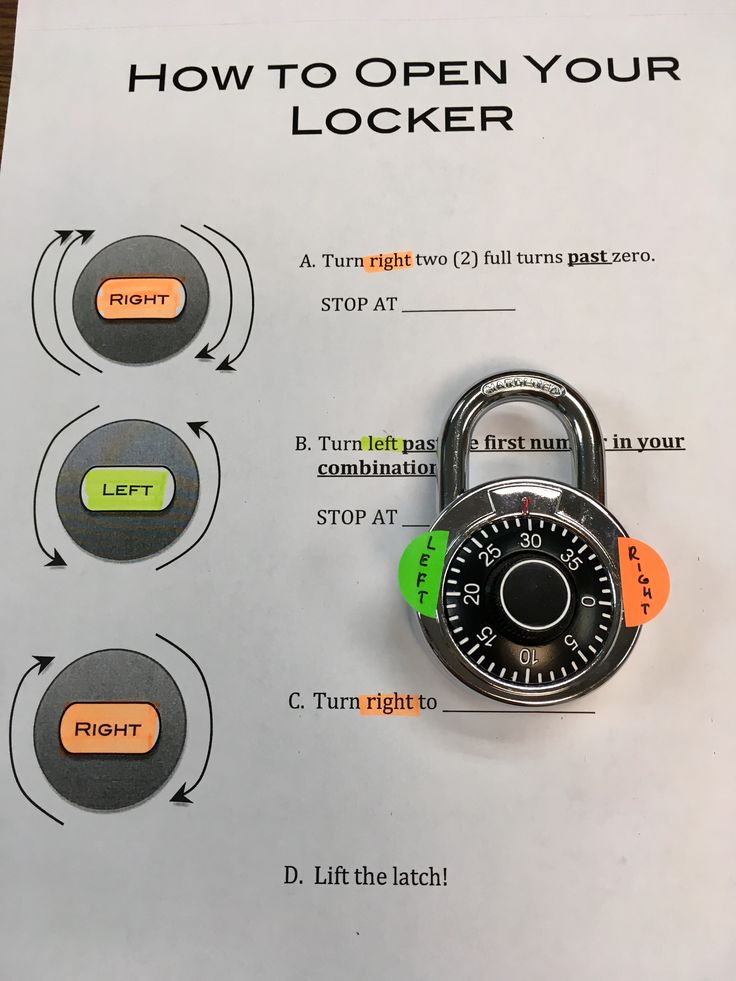
The dial usually has 40 numbers, arranged in a clockwise or counterclockwise sequence. Some may have different number layouts, but the principles remain the same.
Identifying the Combination Type
Knowing your combination type is crucial. There are three common types:


- Direct set: Numbers are set in sequence, like 0-1-2.
- Indirect set: Numbers are out of sequence, like 0-2-4.
- Mixed set: A combination of direct and indirect sets, like 0-3-1.
To figure out your combination, you'll need to identify the type. Start by trying simple direct sets, then progress to indirect and mixed if needed.
Finding Your Combination
Once you've identified the combination type, it's time to find your numbers. Here's a systematic approach:
- Spin the dial clockwise or counterclockwise to a random number, say 20.
- Try all possible combinations starting with 20 and the identified combination type (e.g., 20-21-22 for direct).
- If the lock doesn't open, move to the next number. For instance, try 19-20-21, then 18-19-20, and so on.
Be patient. It might take a few attempts, but this method ensures you'll find your combination eventually.
Mastering Specific Combination Locks
Some locks have specific features that differentiate them from standard combination locks. Let's explore a couple:
Dials with Different Number Ranges
Some locks might have a smaller or larger number range, or they might skip numbers. For instance, you might have numbers 1-36 instead of 0-39. The process remains the same, just adjust your starting point and range accordingly.
Double-Dial or Multi-Dial Locks
Double-dial locks have two dials, and you need to set the combinations on both to unlock. Start by setting one dial to a random number, then follow the same process on the second dial. Once both dials are set correctly, the lock should open.
Remember, practice makes perfect. The more combination locks you open, the better you'll get. Happy unlocking!
Now that you're a master at opening three-number combination locks, you're ready for any lockout challenge that comes your way. Stay sharp, and keep practicing to maintain your newfound skill. Happy unlocking!"
Related Articles
Mastering 3-Digit Combination Locks: How-To Guide
Imagine you've found yourself in a situation where you need to unlock a combination lock, but you're stumped on the 3-number code. Don't worry; you're not...
Mastering 3-Digit Combination Locks
Ever found yourself stranded at a locker, hungry for your freshly made lunch, only to remember you can't recall the numbers to your 3-digit combination lock?...

Mastering Combination Locks: A Simple Guide to Decode in Seconds
Picture this: You've just arrived at your locker, ready to grab your books and head to class, but disaster strikes. You can't remember the combination to your...

Unlock in a Snap: Mastering Number Locks
Ever found yourself locked out of your home or safe because you forgot the combination to your number lock? Don't panic, there are several methods you can use...

Mastering Locker Combination Locks: A Simple Step-by-Step Guide
Ever found yourself staring at a locker combination lock, the tumblers taunting you, while you're running late for your next appointment? You're not alone...
Mastering 3-Digit Combination Locks: Crack the Code Easily
Unlocking the secrets of a three-digit combination lock can often feel like solving a puzzle, a challenge that many face daily. Whether you've forgotten your...